Afterworld Dev Diary #2 - The Afterworld
Paradox Development Studio
Sep 1
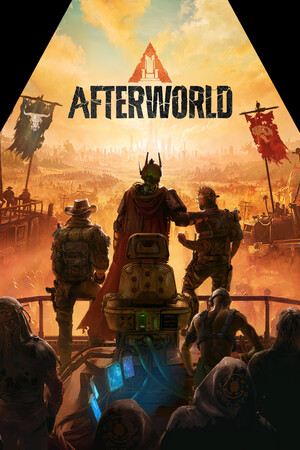
Everyone knows Old America existed. Nobody is sure what it was like. The Ancients were many, certainly, and built great towers. They tamed machines, but their machines have forgotten humanity and gone feral. The Ancients had the science to do whatever they wanted. What did the Ancients want? This, at least, is obvious: they wanted to die.
I’m Luke, Afterworld’s Elder Lorekeeper. Today I’m honored to grant you a glimpse into the world of our game. Like all good prophetic visions, it is a glimpse that must remain incomplete for now.
In Xenophon’s Anabasis , Greek mercenaries fleeing the Persian Empire march past a vast ruined fortress. Xenophon knows almost nothing about it:
It was once inhabited by the Medes. The foundation of its wall was made of polished stone full of shells, and was fifty feet in breadth and fifty in height [...] Zeus, however, rendered the inhabitants thunderstruck, and thus the city was taken.
Today we know this fortress was Nineveh, Iron Age capital of the mighty Assyrian Empire. It had been the center of the world, and now it was nothing.
Afterworld draws on many sci-fi and classical epic stories for inspiration, some obvious ( Mad Max, A Canticle for Leibowitz, Rimworld ) and others a bit further afield ( The Epic of Gilgamesh , the SCP Foundation, King of Dragon Pass ), but we also try to ground the societies we depict in our own ancient history. Like the Bronze Age, scattered settlements are being forged into complex civilizations. Like the Iron Age, societies with a technological edge are racing to carve empires out of chaos. And like the Classical Age, opposing belief systems and political ideas are battling for hearts and minds. We particularly look to the Bronze Age when we’re figuring out how Dustland societies might rule and think and tell stories. In that era, the dominant society ended up something like “agrarian slaver kingdom ruled by a warrior and/or priest caste.” But things might turn out different this time. The people of Afterworld have access to ideas and technologies alien to the Bronze Age. Would the Assyrians have been better off with rail guns? Maybe, maybe.
Afterworld also takes place deep in the shadow of Old America. The history of American frontier expansion is another touchstone for us, full of varied ways of life rapidly changing and violently clashing. Droneherders aren’t exactly cowboys, but they aren’t not cowboys. Tecumseh’s Confederacy, fur trapper rendezvous, Haudenosaunee government structure, and Comanche raiding tactics all make appearances if you know where to look for them.
Like 1800s America, Afterworld depicts a period of intense religious revival, where the dominant forms of Christianity are facing challenges from a variety of new faiths. Those faiths may seem strange to modern eyes, but we want them to feel pulpy not goofy . We embrace classic genre tropes with full sincerity. Why would a thoughtful, intelligent person trying to understand the world leave religious offerings at a Rocky Balboa statue? Well, Pop-Cultists aren’t deluded or dumb, they’re practicing a form of ancestor veneration that helps them understand the minds of the Ancients. Several forms of motor cult share a belief in a pantheistic mechanical world-spirit, the Great Motor Turning the Earth, whose gift of combustion teaches humans to be fast and free. They don’t misunderstand what an engine is, they just attribute spiritual significance to it that most of us wouldn’t. And don’t count the Abrahamic faiths out just yet: Baptists, Methodists, Mormons, and other mostly-familiar faiths remain strong in the areas you’d expect, while sects like Solar Christianity and the Revolutionary Catholics seek new paths to God.
The world slept for a long time after the Fall. In this era, the surface world was dominated by automated weaponry and extreme environmental devastation. Few societies larger than bands of a couple dozen people existed. Afterworld begins about a century after this midnight of humanity has ended. Even still, Dustlanders at game start are resource-poor and their lives are short. They live surrounded by the remnants of deadly technologies they barely understand. It is dangerous to trust a stranger, yet it is dangerous to have no friends sworn to war by your side. It is dangerous to meddle with dark science, yet tribes without science are weak and soon to die. Dangerous things must simply be done. They draw courage from heroes, myths, prophecies, and omens.
The history of the Dustlands is a mix of fixed points and procedural generation. Each new campaign starts with a handcrafted map painted with pre-Fall locations and terrain, which warps as we simulate a semi-random apocalypse. Sometimes Los Angeles will be a thriving pilgrimage site for Pop-Cultists, and sometimes it will be a smoking crater. The railway empire of the Subunion will usually have a catastrophic civil war and spill onto the surface, but sometimes the Subunion Collapse will take place 30 years before game start, and sometimes it might happen 30 years after game start. Or maybe they will march out of the tunnels as a united force, ready to conquer the surface.
Our procedural history leaves scars on the environment as well. An area that suffered direct hits from nuclear warheads may not have much drinkable water, but rangers equipped to brave the radiation will find more usable parts, since most of the easy-to-reach stuff was cleaned out years ago. In the most extreme cases, experimental weaponry may permanently warp the landscape of large regions. These may take the form of unique regional disasters: razor-sharp Glassweed may have been sown as an area-denial weapon in the Great Plains, while Cascadia may be drowning under an unending cyclone. Pockets of safe, fertile land are a treasure worth killing and dying for. Many tribes adapt their culture and lifestyle to thrive in seemingly hostile environments. Others migrate from land to land grazing their herds and scavenging whatever they can find.
At the start of Afterworld, the world is on the brink of sudden change. An age of wandering bands is drawing to a close, and an age of clashing empires is about to dawn. Now plants are sprouting in once-barren soil. Scribes are copying out manuals to ancient weaponry. The operational lifespan of generation shelters is drawing to an end, and their seals are unbolting.
And somewhere, not over that hill or the next hill but one hundred hills onward, there is a land ruled by a president who never dies, and a land ruled by a warrior-maiden made of sunfire. Plans they have brooded on for generations grind into motion, and their war machines are waking…
The Turns Expedition continues their journey below. May your wanderings return you here for the next Dev Diary in two weeks time, on September 16th. Soft winds and safe waters, travellers!
Turns Expedition - Interview Excerpt.
Subject: shepherd, Santa Monica Mountains.
Grass this summer’s taller than the last and it was taller last summer than the one before. Lost a good ewe in the hills last week. I’m grateful for the teeth I got and I’m right with all the gods. That’s all there is to say about me.
I don’t graze ‘em in Los Angeles. You kidding? They’d eat broken glass and who knows what else. Used to join scrap runs into the city when I was a kid. The seventy bandit-kings of Great Lah ran the hills back then. They were gonna clear out the ruins, build seventy palaces in the old towers. So much for them.
See that hill? You’ve got glass eyes [binoculars] , see the big grassy mound? The Lah had their court there. Beautiful, shining thing. Walls with murals painted in every color. Thought they ruled the world. Julieta marched through and put all seventy of ‘em on her pyres, easy as dusting her boots.
Why? I guess she didn’t like them. Why do goddesses do anything? The ashes were good for the grass. Maybe that’s why. Pah, going around quizzing honest folk about theology.
Earlier expeditions noted with interest (and some concern) the emerging civilization of Lah, a highly cultured league of raider-poets tracing their descent to a mix of celebrity bunkers and pre-Fall organized crime. We came here expecting to exchange gifts with the Lah court. While Lah political consolidation posed a potential threat in its own right, the nature of their downfall is deeply troubling.
This announcement was originally published by Paradox Development Studio on Steam on Sep 1, 2026.
Open the original on Steam